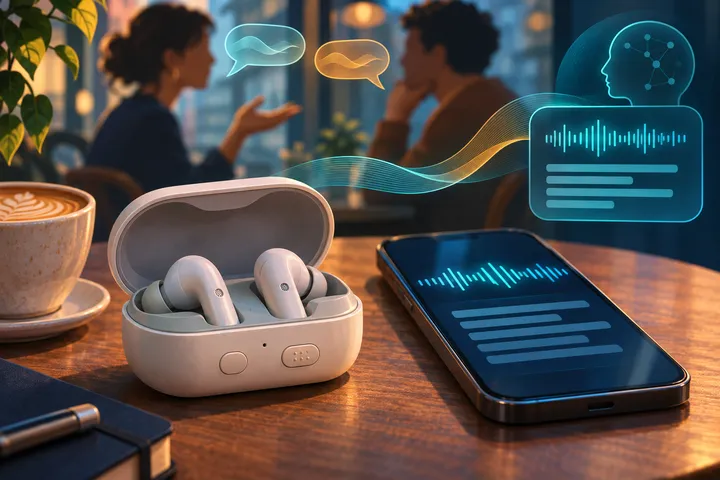
Nothing’s Ear Note puts the microphone in a place that looks like an ordinary earbud case. The company says the earbuds can record calls, while microphones in the case capture in-person conversations; a companion app is meant to turn recordings into transcripts and AI-generated summaries. That is a product announcement, not yet evidence that the summaries are accurate or that the device is ready for every meeting room.
In a November 25 post on X, Nothing chief executive Carl Pei said the Ear Note would launch December 8 and described calls recorded through the earbuds and meetings through the case. He pitched it as “the first step toward a hardware context layer for AI”: ambient context gathered by a device people already carry, then made available to software agents. The post is a company description of the product’s ambition, not a demonstration that an agent can reliably draft documents, send email or assign tasks from a conversation.
The Verge reported that the case adds a Record button alongside a Talk button for personal voice notes. Its earlier coverage, citing Bloomberg’s November 23 report, said the app would manage recordings, transcripts and summaries and that the earbuds were expected to support several AI agents, including Nothing’s voice-control system. Nothing’s public post does not explain which models handle transcription or summaries, whether processing occurs on the phone or in the cloud, or how long audio and derived notes are retained. Those details matter because a transcript can remain sensitive after the original recording is gone.
A recorder that travels into the conversation
The distinction from a phone memo app is physical and social. The case is designed to sit near a conversation while its owner wears the earbuds; the company says a button starts recording. That deliberate control is different from claiming the device is always listening, but the launch material does not establish what people nearby will see or hear when capture begins, whether callers receive notice, or what controls users get for sharing and deleting transcripts and summaries.
Bloomberg reported that Nothing consulted legal advisers, obtained privacy certifications comparable to those used by competing recording products and formed a London-based security team. Those are company-reported safeguards, not an independent security audit or a published account of the data flow. The actual certifications, storage locations, access controls and deletion behavior have not been specified in the material reviewed here. Recording rules also differ by jurisdiction and setting, so a physical button does not by itself settle questions of consent.
The AI claim still needs a real-world test
Speech recognition converts audio into text; summarization then compresses that text into a shorter account. Both steps can lose speaker attribution, qualifiers or disagreement, and a polished summary can make a mistaken transcript look authoritative. Nothing has not yet published an accuracy evaluation, language list, benchmark, or test results for the Ear Note in the announcement material reviewed here. Nor has the company shown how its “various” agents use a transcript or prevent a mistaken summary from triggering an unwanted action.
The category is already crowded with products marketed around recording and AI notes, including Plaud’s devices and Amazon’s Bee. Ear Note’s more consequential pitch is not that earbuds can capture speech, but that a wearable can feed conversations into a broader agent workflow. Whether that feels like useful context or an uninvited participant will depend on controls, privacy disclosures and performance that buyers can inspect—not the label “AI-native.”
Nothing has announced a December 8 launch; at the time of reporting, price, full technical specifications and independent product testing were not available. The company’s announcement establishes a planned feature set, not a verified capability or a settled approach to consent and data handling.